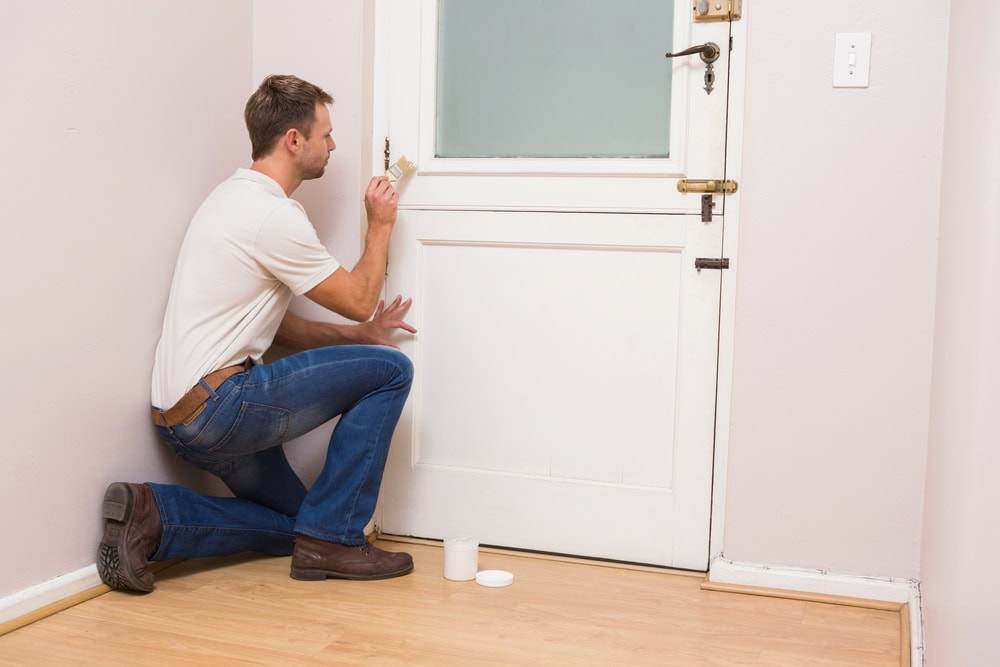
Freshly painted interior doors make trim look sharper, walls cleaner, and rooms more polished. The job is fast, affordable, and instantly noticeable. This guide shows you how to paint interior doors the right way—from choosing the right sheen and tools to addressing drips, brush marks, and stuck edges—so your finish looks new for years.
The Quick Plan (Skim This First)
- Decide sheen: satin or semi-gloss for easy cleaning and a crisp look.
- Choose paint: quality enamel formulated for doors and trim.
- Pick method: high-density foam roller + brush, or an HVLP sprayer if you have experience.
- Prep well: remove hardware or mask; clean; sand; fill; prime.
- Apply thin, even coats; allow proper dry and recoat times.
- Cure fully before closing doors for long periods.
For an expanded walkthrough, see our detailed guide to painting interior doors—it complements the steps below.
Step 1: Choose the Right Sheen and Color
Sheen
- Semi-gloss: Bright, wipeable, and durable—great for kids’ rooms and high-traffic areas.
- Satin: Softer glow that still cleans well; hides minor surface flaws better than semi-gloss.
- Avoid flat/eggshell on doors—they scuff easily and don’t wipe clean as nicely.
Color
- Match your trim color for a built-in look, or go one step brighter for a subtle highlight.
- Warm whites flatter creamy walls; cool whites pop against grays and blues.
- Deep colors look striking but require excellent prep; darker enamels show flaws.
Step 2: Gather Tools and Materials
- Quality door & trim enamel (water-borne alkyd or acrylic enamel)
- Bonding or stain-blocking primer (especially over glossy, unknown, or stained finishes)
- 120–180 grit sandpaper (plus 220 for smoothing between coats)
- High-density foam roller (4–6″) and a 2–2.5″ angled brush
- Deglosser or mild cleaner, tack cloths, vacuum
- Wood filler or spackling, flexible caulk for gaps at casing
- Painter’s tape, masking paper, hinge pins, puller or screwdriver, drop cloths
Step 3: Remove or Mask Hardware
The cleanest result is achieved by removing knobs and latches. If you prefer to mask, use sharp tape lines around hinges and hardware. Keep screws in labeled bags to make reassembly easy. If the door fit is tight, pull the door and paint it flat on padded sawhorses—this reduces drips and lets you work faster.
Step 4: Clean, Scuff, and Fix Flaws
- Wash the door with a mild cleaner to remove oils and fingerprints. Rinse and dry.
- Scuff-sand with 120–180 grit to break the gloss and improve primer and paint adhesion.
- Fill dents or divots with wood filler. Let dry, sand flush, and vacuum dust.
- Caulk small gaps where casing meets wall; smooth with a damp finger.
- Dust control is non-negotiable. Vacuum the door and wipe with a tack cloth.
Step 5: Prime for Adhesion and Uniformity
A light bonding primer helps the new paint level and stick, especially over old enamels or mystery coatings. For stained or tannin-heavy wood, use a stain-blocking formula. One thin, even coat is usually enough; sand lightly with 220 once dry for a baby-smooth base.
Step 6: Map the Door—Paint in the Right Order
Whether you roll/brush or spray, follow the door’s panel layout:
- Panels first (the recessed rectangles)
- Rails (horizontal pieces)
- Stiles (vertical pieces)
Work top to bottom so any tiny sags can be pulled smooth as you go. Keep a wet edge—overlap each fresh stroke slightly into the last before it sets.
Step 7: Rolling and Brushing for a Near-Sprayed Look
- Load lightly: A high-density foam roller lays a fine film without heavy texture.
- Tip off: After rolling a section, feather the paint gently with the brush in the direction of the wood grain or panel lines.
- Watch edges: Doors love to catch excess paint along edges—run the brush lightly to even them out.
- Two thin coats are better than one heavy coat; heavy films sag and take longer to cure.
Step 8: Spraying (If You’re Comfortable)
Sprayers can produce an ultra-smooth finish, but masking is critical. Practice on cardboard to set fan width and flow. Spray light passes, release the trigger from the work, and overlap each pass by 50%. Keep the gun perpendicular to the surface and at a consistent distance.
Step 9: Dry, Recoat, and Cure Times
- Dry to the touch does not mean recoat—follow label guidance precisely.
- Sand lightly with 220 between coats for that polished look.
- After the final coat, allow cure time before reinstalling hardware or closing the door against weatherstripping. A gentle close on day one; normal use after full cure per the can.
Pro Tips for a Flawless Finish
- Strain your paint into the tray to catch tiny nibs that cause bumps.
- Maintain temperature and humidity in a comfortable range; extremes affect leveling and dry times.
- Use fresh rollers and clean brushes—old tools can shed lint or leave tracks.
- Keep lighting bright and move your body to check reflections; you’ll spot sags early.
- Feather transitions at the top and bottom edges to prevent a paint ridge.
Troubleshooting: Fixes for the Most Common Issues
Brush Marks or Roller Texture
- Add a touch more open time (within product guidelines) by working in smaller sections and tipping off every panel.
- Sand lightly with 320 once dry, and apply the next coat with a thinner.
Drips and Sags
- Catch while wet and pull smooth with the brush.
- If dry, let fully cure, then level sand and touch up.
Paint Sticking to the Jamb
- Let the door cure longer.
- Lightly wax weatherstripping with a slip agent or use painter’s tape on the jamb for the first day.
Tannin or Stain Bleed-Through
- Spot prime with a stain-blocking primer, then recoat.
Fisheyes or Beading
- Indicates contamination. Stop, clean and sand, then reprime before continuing.
If you want an extended walkthrough before starting, read this article on how to paint interior doors—it reinforces the steps here with additional prep detail.
Panel vs. Flush Doors: Small Adjustments
Panel doors need that panel-rails-stiles order for crisp edges. Flush doors (flat) are simpler: roll in vertical sections, then tip off in long, continuous passes. On veneered flush doors, apply light pressure to avoid lap lines.
Sheen, Color, and Room Style: Making the Door Work With the Space
- In busy family areas, semi-gloss is your friend; fingerprints wipe off fast.
- For quiet bedrooms or offices, satin feels refined and calmer.
- If walls are patterned or bold, keep doors and trim consistent to avoid a noisy feel.
- Upgrading hinges and hardware after painting makes the finish look more custom—consider matte black, polished nickel, or classic brass, depending on the room’s vibe.
Safety and Setup
Keep rooms ventilated and protect floors. If sanding old coatings and you’re unsure of their age, follow lead-safe practices. Wear eye protection and a dust mask during sanding.
Timeline Cheat Sheet
- Prep: 45–90 minutes per door (clean, sand, fill, prime)
- Coat 1: 15–25 minutes
- Dry/Recoat: As directed on the can
- Coat 2: 10–20 minutes
- Cure: Handle gently for the first day; full hardness per product
When to Call a Pro
Hire help if you’re juggling multiple doors, facing heavy wear, want sprayed results without the risk of overspray, or if previous coatings are unknown and need testing. Pros also help when timelines are tight and every hour counts.
FAQs
1) Do I have to remove interior doors to paint them?
Not always. You can paint doors in place with careful masking. Removing them to sawhorses often speeds the job and reduces drips, especially on panel doors.
2) What’s the best paint for interior doors?
A high-quality door and trim enamel—water-borne alkyd or advanced acrylic—levels smoothly and cures harder than standard wall paint.
3) How many coats do I need?
Usually two thin coats over a good primer. Dark or deep colors may require a third to achieve full richness.
4) Can I skip primer if the old paint looks fine?
If the surface is glossy, stained, or unknown, use a bonding or stain-blocking primer to ensure reliable adhesion and color uniformity.
5) How long before I close the door?
After the final coat is dry, allow additional cure time per the label. Close the first day and avoid prolonged contact with the stop and weatherstripping until fully cured.